

jbit
Joined 13 years ago
Karma
43
Submissions
23
Member since
Apr 11
Joined 13 years ago
So there's lots of focus on having a good alternative to C/C++
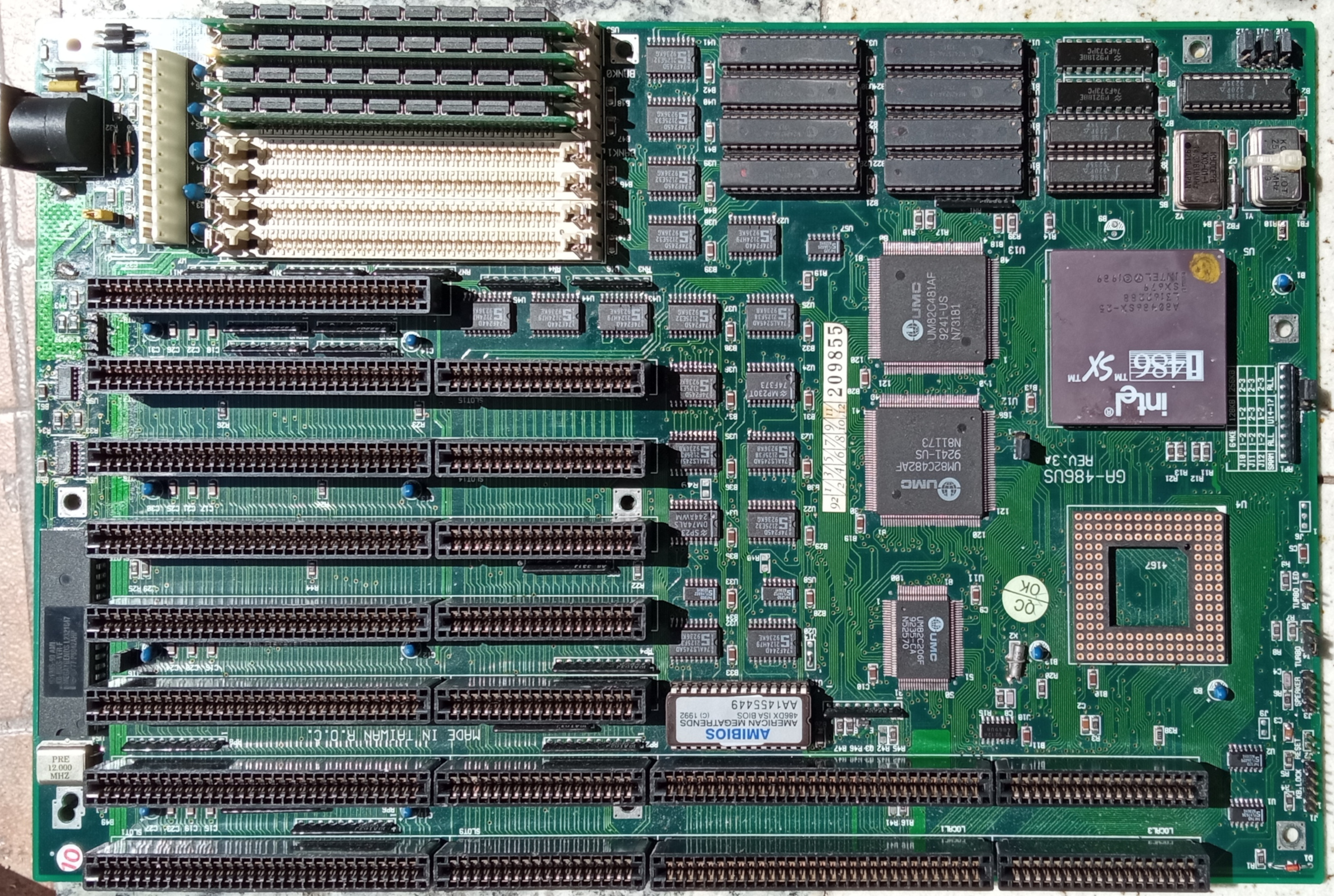
Opti local bus was the most common, and had a few different boards: https://ancientelectronics.wordpress.com/tag/opti-local-bus/
Gigabyte had one that was only used for the "GA-486US" motherboard. The connector was just two 16bit ISA cards back to back: https://theretroweb.com/motherboard/image/ga-486us-front-60b...
I believe there were some others from different vendors.
The signaling for all of these was pretty similar to VLB, since it was just the 486 bus on a connector.
EDIT: Ah, actually the unit is microseconds, so `60000` would be 60ms
For context, this is the page the cease and desist was referring to.
> These SVG images were created by modifying the images of Pixabay.
And indeed, the images seem to be taken from pixabay (e.g. [0], [1]), however the pixabay license is NOT CC0, and specifically forbids redistribution [2]:
> Don't redistribute or sell Pixabay content on other stock or wallpaper platforms.
[0]: https://svgsilh.com/image/1801287.html
[1]: https://pixabay.com/vectors/grooming-cat-kitty-kitten-feline...
Most *nix systems are happy if you pad the left over bytes with newlines, so there's no need to mess with the filesystem metadata or anything like that. :D
f-droid also encourages reproducible builds: https://f-droid.org/en/docs/Reproducible_Builds/
This means you can verify the APK on the f-droid store matches what's in github by building it yourself and comparing the signatures.
And if you want to do this, f-droid has an automated way: https://f-droid.org/en/docs/Verification_Server/ Of course, you still have to trust the verification server source code, but that runs locally on your hardware and is auditable.
[1] https://www.kernel.org/doc/Documentation/device-mapper/verit...
[ my public key: https://keybase.io/jameslee; my proof: https://keybase.io/jameslee/sigs/JpzEXrHBhMZcaZOz_ooeR9_GHTtamgLZwn9pMdPpAEs ]