

splat
Joined 17 years ago
Karma
2,392
Submissions
385
Member since
May 13
Joined 17 years ago
In local races it's fine to put up someone with no or little experience in government, as long as they are a respected member of the community. But you can't just put up "some dude" for president. So in practice this means we have to take defectors. But heaven knows there has been a lot of consternation in the LP over this. My guess is that the LP is getting tired enough of taking former Republicans that whoever they nominate in 2020 will be homegrown. (Maybe a former Democrat.)
But while the presidential race gets the most press, we've been working hard to get Libertarians elected at lower levels of government. It's just really, really hard to break past the two party mindset (and ballot access laws), and we haven't had a lot of success to date. The difficulties we have getting people elected to the lower levels of translate directly to us nominating former Republicans for president.
Nor should it! The judiciary is at its best when it is overturning the will of the majority in order to defend the rights of minorities.
The Court did precisely that in its most celebrated cases (e.g., Brown v. Board, Lawrence v. Texas), and upheld the will of the majority in its most infamous cases (e.g., Dred Scott, Plessy v. Ferguson, Korematsu v. United States).
This varies state to state. In many states you must identify yourself at the level of providing your name and address, but you are not required to produce any documentation.
But it was useful to get information when people were getting upset that the city was trying to replace the green space in a park with a bunch of little league baseball parks.
http://www.laphamsquarterly.org/fashion/crusader-chic
The short version is that it was fashionable in Fatimid Egypt for the ruler to bestow high quality garments to government officials as a sort of promition. These garments usually had verses from the koran embroidered along the hems. The crusaders brought back many of these garments to Western Europe where they became very popular, and the style was imitated in paintings.
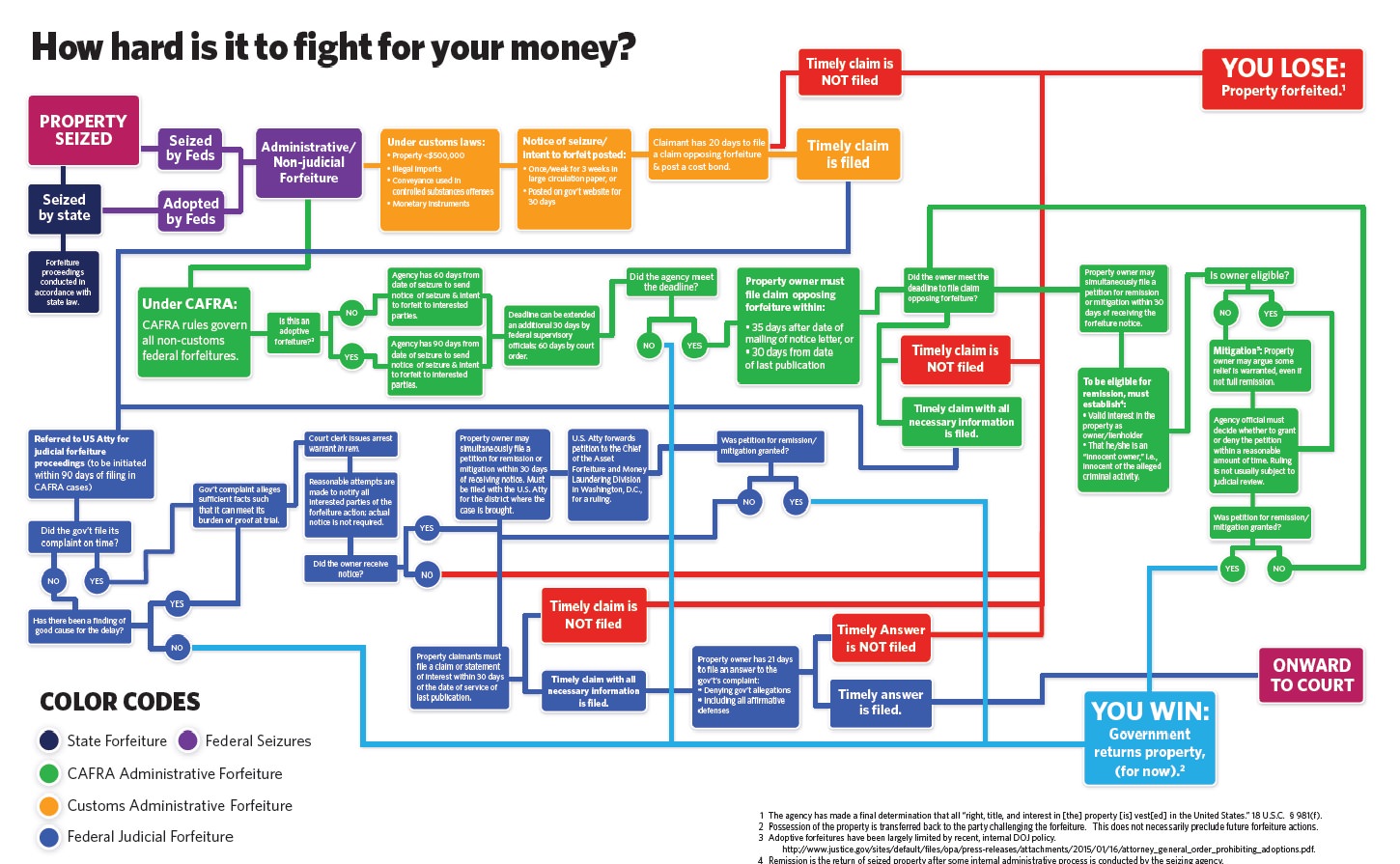
https://reason.com/assets/mc/2015_06/forfeitchart.jpg
Regarding point 3, part of the problem, too, is that the federal government engages in sharing programs with local agencies. So if most of the money from a local-level forfeiture does not go back to the agency, the agency has a strong incentive to bring the feds into it because then they will keep a considerably larger fraction of the proceeds.
It seems a little to me like get-out-the-vote campaigns. They're dressed up as some totally non-partisan, civic-duty enterprise. But if you're targeting your efforts towards demographics that you know are generally going to vote a certain way, can you really claim with a straight face that you're not helping a particular political party? Here you know a priori that you'll be encouraging people to get involved in politics with a certain bent. I'll point out that none of this is bad, per se, but I think it's why you can expect conservatives to react defensively.