Shrezzing
Joined 3 years ago
Karma
792
Submissions
157
Member since
Jun 21
Joined 3 years ago
Drax in the UK [1] is a quite good case study for this (assuming they get it all up and running), though they're not using algae. Right now they grow trees, and burn those in pellet form. It's currently considered sustainable as it's not adding new carbon to the above-ground system (whereas coal/gas/oil is adding to the above-ground carbon). Their next phase is to attempt to capture the post-combustion emissions from their chimney stacks, at which point they have a non-biodegradable mass of carbon to bury somewhere.
[1] https://www.drax.com/sustainability/sustainable-bioenergy/
What I'm about to say obviously pales in comparison to raising a child with autism, but entering an ultramarathon/triathalon is a quite good way to experience something like this first hand in a safe environment. The amount a human can actually "go through" when it's asked of them is entirely remarkable.
It highlighted both to the colonised and the colonisers that the empire was way over-extended.
I'm pretty sure for the overwhelming majority of (successful) SaaS businesses, the most expensive part is the marketing & advertising budget. 30-50% isn't uncommon, because the returns on successful sign-ups are enormous.
That the models can't see a corpus of 1-5 digit addition then generalise that out to n-digit addition is an indicator that their reasoning capacities are very poor and inefficient.
Young children take a single textbook & couple of days worth of tuition to achieve generalised understanding of addition. Models train for the equivalent of hundreds of years, across (nearly) the totality of human achievement in mathematics, and struggle with 10-digit addition.
This is not suggestive of an underlying capacity to draw conclusions from general patterns.
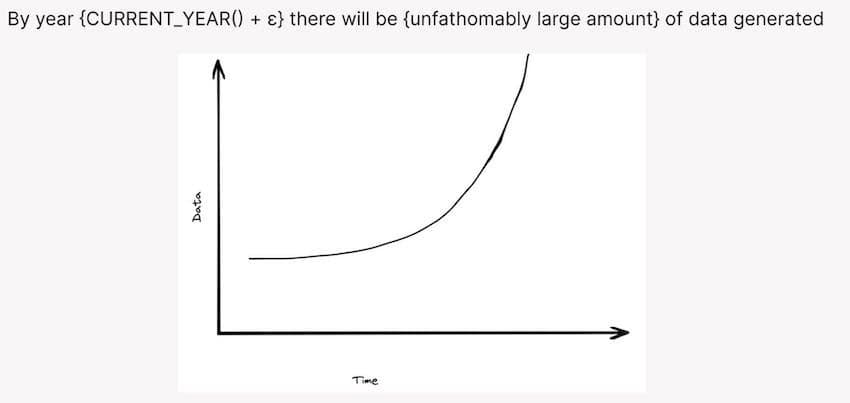
> There are some cases where big data is very useful. The number of situations where it is useful is limited
Even though there are some great use-cases, the overwhelming majority organisations, institutions, and projects will never have a "let's query ten petabytes" scenario that forces them away from platforms like Postgres.
Most datasets, even at very large companies, fit comfortably into RAM on a server - which is now cost-effective, even in the dozens of terabytes.
[2]https://motherduck.com/_next/image/?url=https%3A%2F%2Fweb-as...
https://www.scotsman.com/webimg/legacy_elm_28724349.jpg?crop...