windsignaling
Joined 10 years ago
Karma
235
Submissions
91
Member since
May 18
Joined 10 years ago
Ah, the ol' gaslighting you into thinking you're gaslighting me trick.
"226 karma in 10 years." - What does that even mean to you? Should I be posting more? Does my behavior not align with your list accepted human behaviors for a non-Chinese?
The ridiculousness of your post shows how far the anti-China bias goes with you people.
> There's a search bar at the bottom of the page.
The dishonesty here is coming from you. You're assuming something exists. I'm saying show me. If it's so easy to find, wouldn't it be way easier to simply put this definitive proof in my face instead of this weird roundabout argument you're trying to make?
> The final accuracy is 90% because 1 of the 10 observations is on the incorrect side of the decision boundary.
Who is using K-means for classification? If you have labels, then a supervised algorithm seems like a more appropriate choice.
> K-means clustering is a recursive algorithm
It is?
> If we know that the distributions are Gaussian, which is very frequently the case in machine learning
It is?
> we can employ a more powerful algorithm: Expectation Maximization (EM)
K-means is already an instance of the EM algorithm.
This is a well-known and documented phenomenon - the paradox of choice.
I've been working in machine learning and AI for nearly 20 years and the number of options out there is overwhelming.
I've found many of the tools out there do some things I want, but not others, so even finding the model or platform that does exactly what I want or does it the best is a time-consuming process.
I'm no fan of schools forcing STEM students to study boring electives but this is a prime example of why that might be useful.
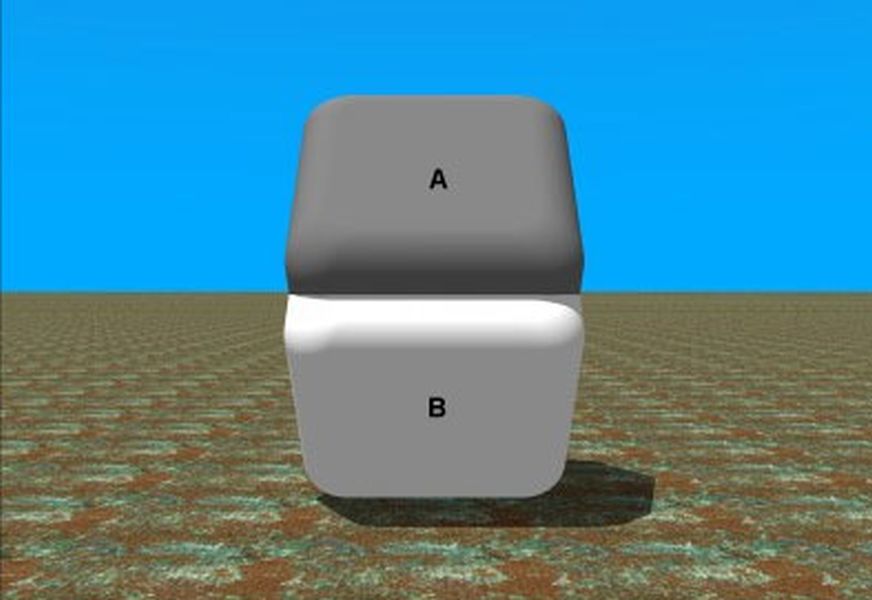
The entire premise of the post is wrong - average pixel value has nothing to do with how orange the oranges look - it's all about perception.
Here's an example where the same exact color (pixel value) can be perceived as either light or dark depending on the context: http://brainden.com/images/identical-colors-big.jpg
That's what the bag adds - context - but the author hasn't made this connection.
Neural networks are trained commonly using maximum likelihood estimation, a common parameter estimation technique.