

troupo
Joined 3 years ago
Karma
5,870
Submissions
4,969
Member since
May 24
Joined 3 years ago
Anthropic is incapable of communicating. They rely on random employees in random threads on random social media to do some kind of PR and posts. Regardless of the issue. Or even non-issues but features.
Some say it was the last sci-fi utopia in modern pop culture.
"When there are fewer competitors it means there's increased competition" is quite the take.
> The real competitors to Doordash and Instacart for grocery delivery are not each other.
Together they will have ~80% of the market.
No. The comparison I'm making is non-functional design vs. functional design.
Modern "designers" wouldn't know functional design if it hit them in the face and couldn't design one if their life depended on it.
> Do I need to see a list of every single application on my computer (utilitarian) or do I need to see the applications I use the most and added most recently (functional)?
Again, you're completely missing the meat of my argument while focusing on superficial.
The meat is: why the hell our huge 5k monitors manage to show less information on screen than 600x400 14" monitors of 30 years ago?
Your answer is "but scaling". No, scaling doesn't solve the issue. At best in modern designs you will see 11 items instead of 10. Where there's space for 50.
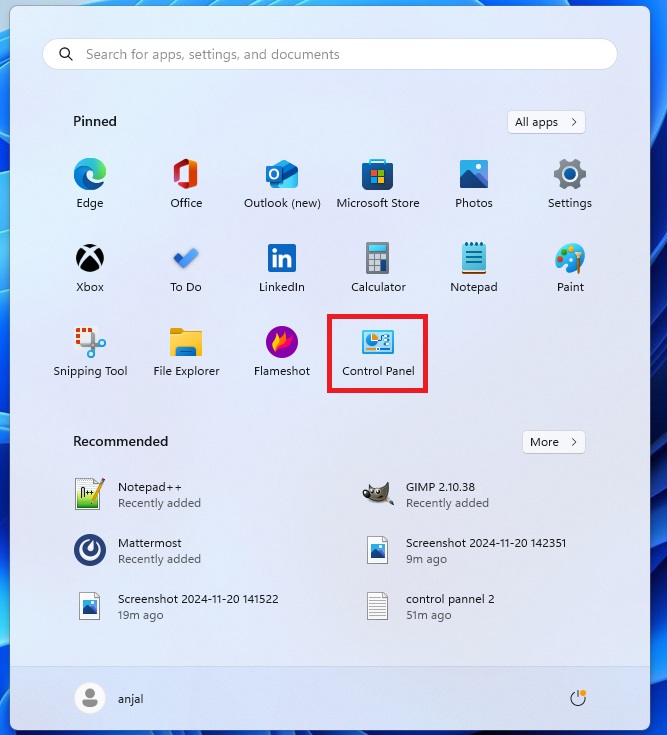
I wasn't saying that Win95 start menu was perfect. I was saying: modern start menu manages to show less information, and more poorly[1], on an area that is 10x the size of the entire screen available to Win95. And that this issue is repeated through the entire design of the OS.
[1] not to say more slowly, but that is an additional can of worms
No, we didn't. And yet we didn't have to scroll through a settings list with 10 elements.
And no, information density isn't "make everything smaller". It's "use space on screen efficiently".
For example, "modern" startup menu shows fewer items on an area 10x larger than the entire screen available to win95. And no amount of scaling can fix that. And this permeates the entire OS: https://www.buildwindows.com/wp-content/uploads/2024/11/4-4.... vs https://pbs.twimg.com/media/HBTFbzlXwAA5OwD.jpg
There's a famous Jobs story in which he insisted that even the insides of the computers be made beautiful. Because that shows care. Now people are arguing that even the outsides can be as ugly as they want, who cares.
Also, reading through their "SPECS".... https://github.com/JetBrains/thinkrail/blob/d299f20d2ba014f3... or https://github.com/JetBrains/thinkrail/blob/d299f20d2ba014f3...
How is this llm-vomit "specs that are ground truth" etc.?
LLMs do not replicate brain functionality.
> Or the brain itself is magic
The brain itself isn't magic
> An LLM with CoT is Turing-complete,
C++ is Turing complete. Hell, HTML+CSS is Turing complete.
> so there's no wall to its capabilities.
There are multiple well understood and well explained walls and limits to LLM capabilities. And none of those walls, or perceived lack of them, stem from something being Turing complete.
> There's no theorems that establish limits of reinforcement learning either.
There's a very obvious and immediate one: availability and size of training data. And compute. And time.
> There's no evidence of quantum computations in the brain.
What does quantum computation have to do with brains or LLMs?
> All you have is a strong belief.
Says the person who just listed a lot of beliefs in marketing bullshit.

https://dmitriid.com
You may know me from these:
- Everything around LLMs is still magical and wishful thinking(2025) https://dmitriid.com/everything-around-llms-is-still-magical-and-wishful-thinking
- Prompting LLMs is not engineering (2025) https://dmitriid.com/prompting-llms-is-not-engineering