

siemprenocasa
Joined 7 years ago
Karma
22
Submissions
11
Member since
Mar 22
Joined 7 years ago
I would argue it's a good thing because it reduces sprawl and uses present land more efficiently.
It's better than bulldozing hectares of land to build new developments in these isolated pockets.
Generally, buyers would rather have something new where they don't have to worry about the repairs/maintenance/annoyance that comes from owning older houses, where it ends up being a money pit for future value (not including historical/charming old homes). It's like choosing: would you rather drive a 1990 or 2018 Toyota sedan?
IDK, maybe this is an opportunity for a "home rebuilding" tax credit incentive or some kind of higher tax on developing new land instead of current land?
As someone who moved to the US, I think one realization why this has not really taken effect is that there is just so much land, there is seemingly always more to build on. Thinking about smaller, denser nations, that is just not a feasible strategy.
It seems like there is more than usual IPOs this August compared to previous years: https://www.nasdaq.com/market-activity/ipos
There's a difference between intention and ignorance. If kids are getting on social media at 9 or 10 years old now (which is not like it's difficult given I see kids with smartphones around 9 years old), then there is a considerably high chance a 9 to 18 year old is going to do something that will look stupid when they are older.
10 - 14 year olds are like the prime example of "knowing just enough to be dangerous to themselves and others". There's got to be 11 year olds out there that just learned about all the swear words and bad words and think "wow, I need to use these".
Now, all of that exists forever on the internet in indelible ink to come back to bite them in the ass as they grow up and become more learned (and hopefully wiser).
If someone truly grasps what they are doing with full intention, that qualifies for a rejection. However, I think it would be hard to separate "this person was just a dumbass at the time" from "this person means what they said" at an age when solving 3x=6 was considered 'smart'.
I support safety mandates to implement safety technology in cars and retrofit it to older vehicles too.
The road is filled with assholes and dumbasses, and while the assholes certainly suck, as a person who walks/scooters around in the city, the dumbasses are the ones that I've learned to really to watch out for.
People looking at their phone while driving, people distracted that are looking away from the road, old people driving that can't even see a crosswalk and don't notice red lights, etc.
Part of the reason, I think, are the almost laughable qualifications to renew a license in most places, and another part is the lax assignment of responsibility on drivers to be competent.
I trust safety technology to do it's job better than I trust 100% of people to be competent while driving.
Like many things, even if 9/10 people do the right thing, all it takes is 1 person to fuck it up for others.
Of course politicians will be interested in some "smart" solution, because it implies the current way is "dumb", and nobody wants to be "dumb". "Smart" =/= "Better". In various ways, proposed "smart" solutions are actually worse or have new consequences, making them not so smart of decisions in the first place.
This kind of stuff is a new lure companies use to fish for money.
His pace is at least an edit per minute, while he's editing, so it's not like he is writing complete articles. It's doing things like changing deadlinks or making grammar changes.
I don't blame them for trying. Many of the "influencers" were women in college or their early 20s that just wanted to buy cute AA clothes, but could't really afford to pay 2-3x what stuff costs at H&M or Forever21, so they were hoping selfies could be used as a coupon to save money. I would totally do the same; worst that could happen is someone says "No" and my pride is a little hurt for a moment, but then everyone moves on.
The only really annoying influencers were the entitled ones who acted like they're Kylie Jenner because they have 1k followers (which are easy to fake in the beginning with free trial bots or follow4follow apps to cross the "1k" threshold quicker). Some of them would be straight up mean. Plus the regional manager would get mad after seeing too many discounts being applied in the daily closing report for items not on sale or promo. I think if someone brings up getting a discount for being an influencer and they get rejected, then they should just accept it and move on. The "Do you know who I am!", "Look at how many clothes I sell on Depop!", "You're gonna be sorry for not giving me what I want" customer is never a fun one to deal with. Then a few just flat out stole clothes in the dressing room then would leave the store. Working in retail was definitely not the best job, but it created a desensitization to dealing with shitty people.
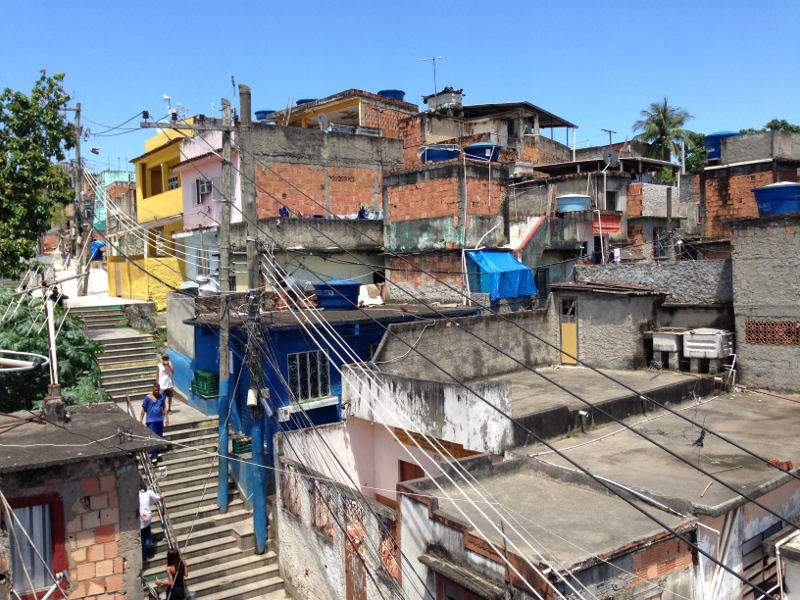
The description above is more similar to "favela" type housing in developing countries: http://catcomm.org/wp-content/uploads/2013/11/Provid%C3%AAnc...
The closest American analog would be like a Great Depression shantytown: https://imgs.6sqft.com/wp-content/uploads/2015/11/20042951/h...
The missing middle housing, per their website, is more formal (regulated) housing with condos/duplexes/etcs, whereas OP's 'third-world' informal housing is more like "let someone build themselves something better than a tent to live in". For example, like the dense favela district next to Rio in Brasil. Above all, no city in the US would be ok with having random individuals build a favela district of unregulated/unauthorized housing. Encampments of a couple hundred people create lots of uproar; there would be a total shitstorm of lawsuits and political panic if people in the US cities lived next to "shantytowns" like those in developing countries.
It makes a difference when comparing justice systems: https://en.wikipedia.org/wiki/File:Map_of_the_Legal_systems_...


It's one side vs. the other. We're better they're worse. One side must be good, one side must be bad. Like interviewing an Arsenal fan and a Chelsea fan about each other.
I honestly don't even know if these groups could possibly put aside their differences to see themselves as all Americans. It seems like everyone is in the mindset of "I'm Team A", "I'm Team B", etc. rather than all part of the same whole.