

Recent submissions

Comment · 19 days ago
Comment · 20 days ago
The instruction was removed when Intel recommitted to AVX-512 on client CPUs (it is available in EVEX form IIRC)
Comment · 3 months ago
You can try to re-vectorize the code for larger vector size.
Comment · 5 months ago
It's more correct to use O_DSYNC in addition to O_DIRECT. This adds FUA to the disk write if the disk requires it for durability.
Comment · 10 months ago
It is actually very cheap if done right. Enterprise SSDs have write-through caches, so an O_DIRECT|O_DSYNC write is sufficient, if you set things up so the filesystem doesn't have to also commit its own logs.
Comment · 11 months ago
Do these calculations take into account the lengthening of the days due to tidal friction?
Comment · 2 years ago
They should have refused
Comment · 2 years ago
Translating 197 M/mm2 into the dimensions of a square, we get a dimension of 71nm. If we compute the "half-pitch", that's 35.5nm.

230 M/mm2 translates to 33nm "half-pitch".

Of course, transistors aren't square and aren't so densely packed, but these numbers are more real IMO.

Comment · 2 years ago
Now I'm imagining submarines full of illicit maple syrup
Comment · 2 years ago
You can implement a virtual machine monitor (e.g. KVM) and then launch a Linux virtual machine to run drivers you lack.
Comment · 3 years ago
The energy cost of extracting oxygen is higher than you'd get from burning it.
Comment · 4 years ago
ScyllaDB is a rearchitecting of Cassandra, not just a rewrite.
Comment · 4 years ago
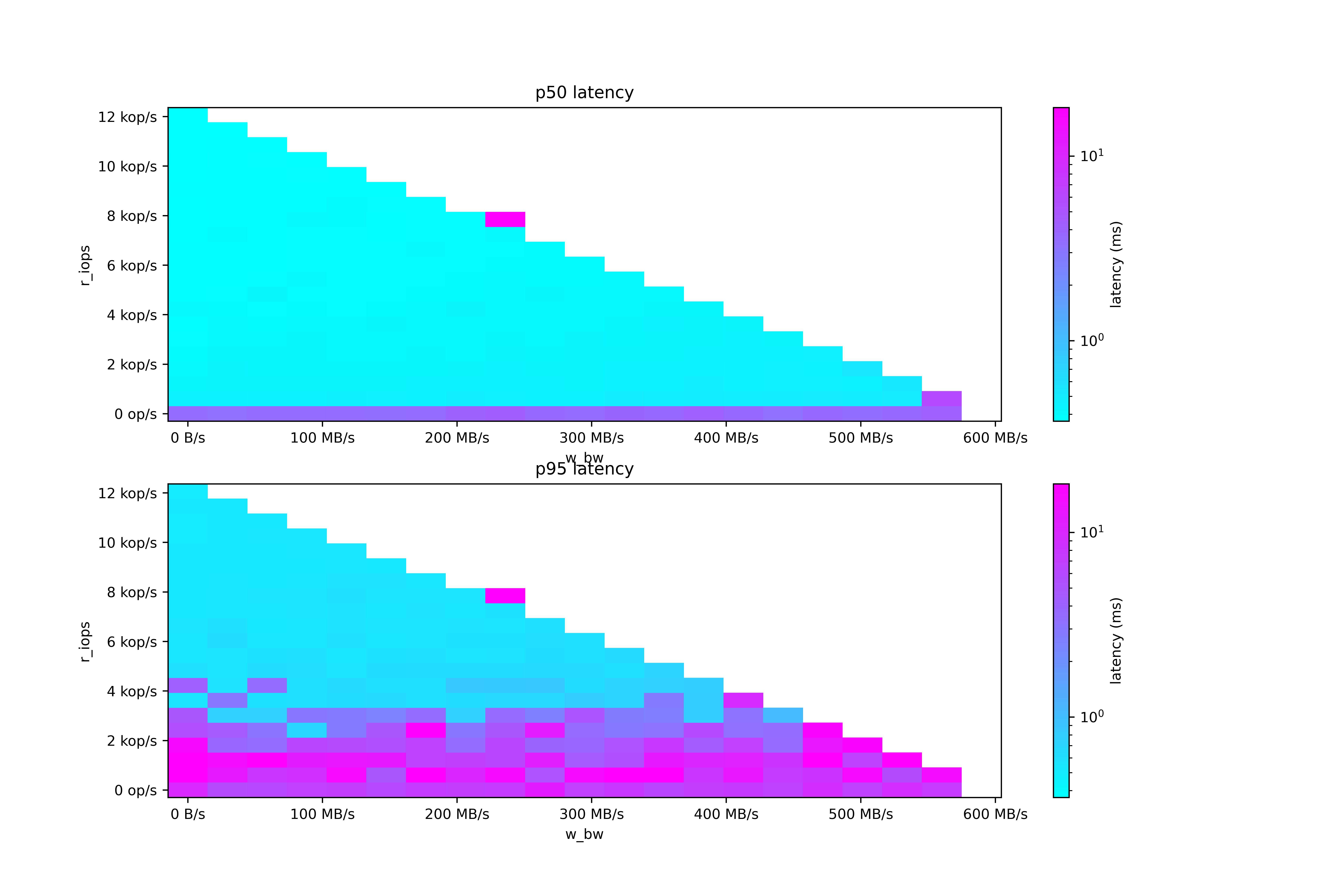
Some more data on Google PD: https://raw.githubusercontent.com/scylladb/diskplorer/master...

Very odd - notice how the latency is high when the read IOPS are low. When the read IOPS climb, 95th percentile latency drops.

Looks like there is a constant rate of high latency requests, and when the read IOPS climb, that constant rate moves to a higher quantile. I'd inspect the raw results but they're quite big: https://github.com/scylladb/diskplorer/blob/master/latency-m...

Background: https://github.com/scylladb/diskplorer/
Comment · 4 years ago
No.
Comment · 4 years ago
Persistent Disk read latency is usually good, but jitters up to 100ms. The scheduler can compensate for high latency (essentially applying Little's Law) but cannot compensate for jitter without saturating the disk.

Live from the official Hacker News API

A modern reader for Hacker News · SvelteKit + Skeleton