rymate1234
Joined 12 years ago
Karma
147
Submissions
65
Member since
Feb 22
Joined 12 years ago
What I see this more doing is eliminating the need for someone to code the glue between the CMS and the website -- you can just ask the AI to add code to get your blogs from Contentful
The exclusive license refers to having access to the models, which is probably why they were able to finetune Bing AI.
> In an attempt to address the issues with open-source licensing, GitHub plans to introduce a new Copilot feature that will “provide a reference for suggestions that resemble public code on GitHub so that you can make a more informed decision about whether and how to use that code,” including “providing attribution where appropriate.” GitHub also has a configurable filter to block suggestions matching public code.
Which makes sense when you consider that the sort of code that is getting reproduced verbatim is usually library functions which developers may copy and paste verbatim comments and all into their project, especially when you prompt the AI with the header of a function that has been copied and pasted often, so the weightings will in that instance be heavily skewed towards reproducing that function
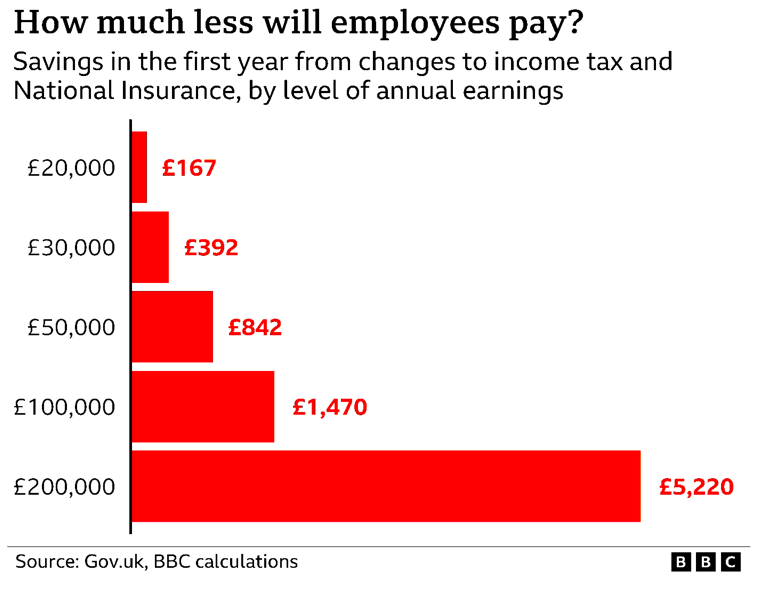
The affect of removing that doesn't seem to be that major, with the figures [1] appearing to work out at almost 1.5% less tax for those on £100k, and a little over 2.5% less tax for those on £200k -- hardly a huge decrease in the tax burden for those people.
[1]: https://blogsmedia.lse.ac.uk/blogs.dir/8/files/2022/09/28sep...
And I've definitely heard of non unionised companies with rigid roles like that where the middle managers liked having defined roles with little room for taking on additional responsibilities.
The difference between the two IMO is if the union has shit representatives you _can_ work with colleagues to get a different union rep as it's democratic when implemented correctly, whereas with a crap management you only have the option of moving job, so at least with a more unionised workforce you can do both.
The danger is authoritarianism and centralisation, and in terms of centralisation big tech companies like Spotify have in spades. You could also feasibly argue they're authoritarian as no-one outside the company can influence policy outside of free market forces, but centralisation can make these companies somewhat immune to said forces, for instance Spotify being the exclusive distributor of Joe Rogan podcasts means those interested in his content have no choice but to continue using Spotify, even though some of his podcasts have been removed.
If only a few people can own private property then you haven't abolished private property, you've just limited who can own it.
This was the main issue caused by the massive state control of Marxist Leninist countries like the Soviet Union -- by centralizing all control within one single political party you essentially just replace an economic elite with a political elite. Couple that with the democratic centralism you often find in these single party ML countries and suddenly you have something that's a lot less like the communal living the OP was referring to.
I'm not saying abolishing private property will be some magical fix all, but I also don't think using the soviet union as an example of why it won't work is a good example. You could have a society where usage of resources is governed by consensus rather than "lol stalin said so" but consensus is obviously a lot harder to do on a global scale than a small communal village