

peckrob
Joined 15 years ago
Karma
1,829
Submissions
296
Member since
May 29
Joined 15 years ago
It was so, so bad it was almost totally unusable on anything larger than a tablet. It made it virtually impossible to read articles on a desktop because everything was so spread out, the font sizes were all messed up, navigation was hidden in a tiny little hamburger at the far upper right of the screen, and a bunch of other problems. But what was wild was how easy it was to fix them. I ended up writing a small (maybe 100 line) CSS user style that fixed almost all of the problems.
They did eventually "fix" the site so that it wasn't as bad on desktop.
For reference, in the past I worked for an immensely profitable eCommerce business and I don't think our entire engineering department ever reached more than 40 people at its absolute largest.
I know all those employees aren't engineers, and I've been around long enough to know that what we see from the outside is just the tip of the iceberg. But if we assume even 25% of them are engineers directly working on the product, that is still nearly 2,000 people. That must be a huge iceberg.
So what on Earth are all those people doing? I am not being sarcastic or obtuse, I am genuinely curious because the only organization that I have ever worked for that was that size or larger was the US government. Is it administrative/managerial bloat? Are there a bunch of different pivot projects going on? What does Twilio have going on that needs nearly 8,000 employees?
I sometimes wonder what’s going to happen in about 40 years when some then Fortune 50 company who built their entire operation on Node suddenly can’t find Javascript programmers because they’re all retiring. :P
[0] https://www.cnbc.com/2020/04/06/new-jersey-seeks-cobol-progr...
If you own your home and you haven't already, do an energy audit [0]. Pay especially close attention to window and door seals. These wear out over time. You can lose a surprising amount of heat through these, and they are very inexpensive to fix. If you have ducted HVAC, check the ducts for leaks as well. Adding additional insulation if possible will also help.
Figure out what your biggest energy sinks are. In most homes the HVAC is the biggest power draw. After that you're looking at major appliances like stoves, washers and dryers, refrigerators, water heater and the like. If you can replace these with more energy efficient versions, it may be worth considering. For ones you can't, figure out ways to use them less.
Close off areas you aren't using. If you have rooms in your home/apartment that are largely unoccupied or only occasionally occupied (like a home office), close them off and consolidate into fewer rooms. If it gets especially cold, close the vents if you have ducted HVAC, seal the doors with tape and put a blanket at the bottom of the door. This will help further seal the heat into the occupied areas. But be careful that you don't cause pipes to freeze by doing this.
Stock up on foods you don't need power to cook. Shelf-stable canned goods are a good bet. It won't be gourmet, but it will keep you alive. If you are in an area that stays suitably cold throughout the winter you could use a cooler outside for food storage instead of a refrigerator.
If you have alternative means of heating (like a fireplace) go ahead and prepare to start using that a lot more. Get supplies like firewood or pellets now and, if possible, be sure you have enough to last you through the winter with increased usage. Find the lowest temperature you can tolerate at home, even if that means you may have to wear a light coat inside.
Monitor your usage regularly. If your utility provides realtime or near realtime usage information, find that now and get in the habit of checking it often. If not, figure out how to read your meter and check it at least daily.
And finally, just try to find ways to not be at home. If you can go work in an office or even a coffee shop, that's a few hours you won't have to keep your home as warm. Try to make your home just for sleeping and adjust the temperature in the home when you are away accordingly. Having a programmable/remote thermostat helps here.
[0] https://www.energy.gov/energysaver/do-it-yourself-home-energ...
As someone who's been on all sides of this (currently an EM, been a tech lead and an individual contributor in the past), I really think there is a lack of understanding among large parts of the tech community about what engineering managers do. A good manager's first and primary responsibility is to reduce chaos for their team. In an ideal world you won't even know I'm here, because I am shielding you from all the stuff that is going on further up in the company and clearing out obstacles so that you can work without interference.
Good managers reduce chaos, bad managers create chaos. In my experience, engineering managers are a lot like all other employees: you have a few outstanding performers, a significant number of average/acceptable/mediocre managers, and some number of pretty bad ones. The difficulty comes in knowing which type you have, and often that only becomes clear when a manager leaves. Either a new EM makes things better, or things get dramatically worse because a good EM is no longer helping the team.
It's like that Futurama episode where Bender meets God: "When you do things right, people won't be sure you've done anything at all."
The biggest downside to it? It put out a tremendous amount of heat. It got to where I didn't like using it during the summer because it would heat up the room. It was basically like running a space heater.
I agree. The amount of misinformation and/or active disinformation in this comment section is horrifying and disheartening.
> My trans brothers and sisters have it way, way worse - especially when surgery and/or hormones are not nearly as easy to come by as these people on the internet would like to think.
It really is wild to me how many people think, like, school nurses are handing out hormone medication like candy or something, or you can just go get them OTC at the corner drug store. My kid's school nurse won't even give her Tylenol without calling me, these people really think they're secretly sending kids home with hormone medication?
It is not and easy or fast process. Often, in the case of gender questioning youth, puberty blockers are used to buy time for them while they assess their feelings and the process plays out, because they are entirely reversible - just stop taking them. The whole initial transition process can often take a year or more from first appointment to hormone therapy starting and there are lots of gatekeepers along the way to safeguard you.
In most places if you are under 18 you have to be under the care of an LGBT-affirming physician (which can be very hard to find, even in cities, and often have months of wait time), have had at least some therapy under your belt, and an official gender dysphoria diagnosis to get hormone treatment started.
Surgical approaches are very rarely considered for young people. Like I am sure there have been some, I can't fully rule it out, but I run in LGBT+ circles a lot and have for decades, and I personally have not met a single person who had any kind of gender-affirming surgery done before 18. Most have them done in their 20s or 30s if they can afford it. The wait times can stretch into years, and the surgeries themselves are often considered cosmetic procedures and are often not covered the same as a medically-required surgery. Even among adult trans people, surgeries are often considered a far off goal that many never be reached, and quite a few will find that they don't want or need it once other transitioning processes have happened and they no longer feel crippling levels of dysphoria.
And all of that assumes you have a supportive parent or guarding and, as one stroll through various transgender hangouts on the web will tell you, that is not as common as one would hope. All it takes is one parent to say "no" and you're not doing anything until you're an adult. Once you are 18 things are a bit more open and you have more options to speed the process up, but it is hard being a transgender youth.
There are a lot of misconceptions in these comments about what being transgender is, what the process for getting HRT is, and all of the various steps needed to reach each person's individual goals. And all of this is easily researchable using Google in 10 minutes, it just takes an open mind and a willingness to see others' viewpoints. It's extremely frustrating.
NextSTEP/OpenSTEP/GnuSTEP feels similar to me. Yes, by modern standards, they are ugly as sin. But they were super, super usable for the users with very little ramp-up time.
By contrast, everything else is just so flat now. On my Mac, it's a regular Where's Waldo to figure out what is and isn't clickable sometimes. There is very little contrast between the window frames and window content ... if there is any at all, and I really dislike how they've largely done away with title bars entirely. And so much stuff is hidden in menus or behind obtuse, difficult to reach settings. I'll occasionally go look at Windows and it's not much better.
What's really frustrating is watching some of my elderly family members struggle to use newer versions of Windows or macOS because the UX has become so flat that using it can be very obtuse if it's not something that you use all day, every day. It feels like redesigning UIs is becoming a vanity project for companies to show they are "modern" ... rather than trying to make things better for actual human beings that use computers.
You know, this is a very enlightening point. I never really thought about it from this angle, but there is a lot of truth to this.
I struggled a lot as a teen with anxiety, depression and bullying. I had a few IRL friends, but the very vast majority of my social interaction during that time came via MUDs and chatting. Many of the people I played and chatted with were fellow social outcasts, and we created our own parallel virtual communities to support and lift each other up. It didn't matter where we were, what we looked like, or how we did or didn't fit in. Many days in the 90s it felt like going to school was the thing I had to put up with, and logging in and seeing my friends when I got home was my real life.
Without them, there's a very real chance I might not be here today. Even all these years later, the people I met virtually during that time are still some of my best and closest friends, and it's a real treat when my travels take me close enough that we can meet for coffee or lunch. Many were at my wedding even, and in one case that was the first time I had ever met them IRL. And yet we knew each other deeply. It felt like we all grew up together because, kinda, we did.
When you look at it like that, those of us who grew up in that environment would look at a screenshot from that era the same way others might look at random photos from high school. Because this was our world.
It's amazing how many emotions seeing that one image gave me. But the biggest was just this overwhelming sense of nostalgia. As I looked at that, I could remember what I was thinking, what I was feeling, everything that was happening in my super confusing teenage life at that time. Occasionally I will look at that image now, even 22 years later, I can still feel all those feeling again.
Of course, my ex's character is in the screenshot too. So, a bit bittersweet as well. :/
While yeah it’s pretty dated by modern standards at the time it was a revelation that you could build standard-based APIs that anyone could use with a simple library and without having to write a TON of custom code.
And regardless, it was far easier to implement than SOAP, which was just a mistake unless you are fully immersed in the Java ecosystem.
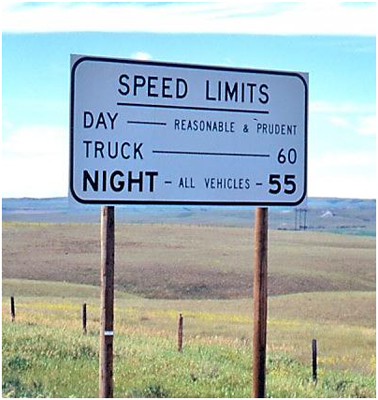
It is widely regarded as one of the least popular pieces of legislation ever enacted by Congress, so hated that it even became the subject of a hard rock song [1]. It was widely ignored by motorists and police alike, with non-compliance rates as high as 85%. Some states made violations of the law basically meaningless, with the "fine" being a few dollars and no points or any other ramifications. It's also why cars over a certain age will have a big circle around the 55 on the speedometer.
What's crazy is that this wildly unpopular law soldiered on, in watered down form, until 1995, at which point speed limits fully reverted to state control. And, in retrospect, because of the widespread non-compliance it is believed that it did relatively little to impact overall fuel usage.
Interestingly, in Montana, there were some places that, prior to the 55 speed limit, had no speed limit. They were signed as "Reasonable and Prudent", and when the 55 speed limit was repealed, the "Reasonable and Prudent" signs went back up [2]. I have a picture of myself in front of one around that time because I was working as a park ranger in Yellowstone. This changed in 1999, and Montana now has a maximum speed.
[0] https://en.wikipedia.org/wiki/National_Maximum_Speed_Law
[1] https://www.youtube.com/watch?v=RvV3nn_de2k
[2] https://images.roadtrafficsigns.com/img/art/Montana-speed-li...
I am not in the Bay Area myself, but about half of my friends there have relocated in the last couple years. A bunch to Washington or Oregon, some to Texas, one to Nashville, and a few others to places mostly in the northeast. All of them cited cost of living as the primary reason ... but all also mentioned full time remote work is what finally made it possible to move.
When you aren't chained to a physical location by your job, lots of things become possible.
Storm spotter. Apple geek. Musician. Amateur historian. Jam band fan. Auburn alum! War Eagle!
https://www.robpeck.com
[ my public key: https://keybase.io/peckrob; my proof: https://keybase.io/peckrob/sigs/8FKjMFgXVZb3n-XJ9nHcCHUN0ol0_lStMOUa6j_ih54 ]