heimdall
Joined 10 years ago
Karma
104
Submissions
22
Member since
Dec 15
Software Development Engineer in Test (Node, Ruby)
View on Hacker NewsJoined 10 years ago
"Dense Plasma Focus device with aneutronic hydrogen-boron (pB11) fuel"
Fusion power has indeed had high R&D costs, but so has any significant project before the ROI starts to kick in. Fusion power (especially the types that don't generate a neutron flux) is safer and more productive in principle compared to fission, and I have high confidence I will live to see a commercial fusion reactor come online in my lifetime.
I'm relatively easy to please when it comes to movies, but to each their own of course.
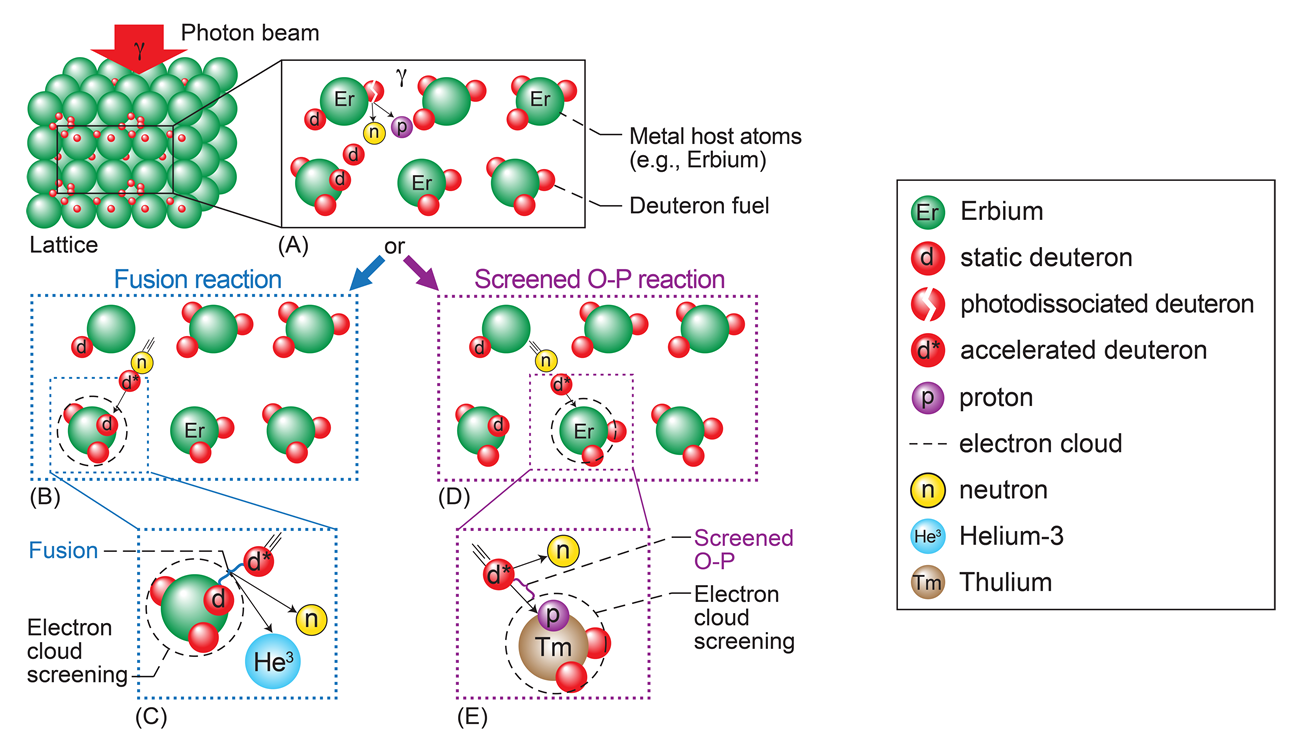
It appears to be the same mechanism as neutronic high-energy fusion. An energetic neutron gets kicked out, which collides with some material in the cell (probably the erbium lattice), and generates heat. Which then needs to be hooked up to a water boiler to create steam, which powers a turbine, etc.
I'm much more hopeful for someone creating a Dense Plasma Focus device with aneutronic hydrogen-boron (pB11) fuel because the reaction energy can be directly captured as electricity, instead of having to capture hot neutrons to boil water.
Theoretical LENR device would be comparable to an RTG [1] because at high heat the device would melt itself. It's more about a trickle of stable power, rather than being used as a cell of a power plant. So, ignoring support infrastructure and focusing on the size of the power generator, we have:
Using the power source for the voyager probe as an example:
RTG size: 0.5m x 0.5m x 1m == 0.25 cubic meters.
RTG power: 2400 watts (thermal)
RTG power density: 9600 watts per cubic meter
Using ITER as an example for the scale of fusion power plant:
Reactor size: 800 cubic meters
Reactor power: 500,000,000 watts (thermal)
Reactor power density: 625,000 watts per cubic meter
So yeah, theoretically it would be compact, but low power density. Enough to power a space probe, but not our civilization.
[1] https://en.wikipedia.org/wiki/Radioisotope_thermoelectric_ge...
Putting aside all the controversy of LENR (low-energy nuclear reactions, the official name for cold fusion) and assuming that the theory actually results in usable tech (for once), the first line of the NASA article hints at where a device's power density would be competitive:
> "A team of NASA researchers seeking a new energy source for deep-space exploration missions"
which tells me that a theoretical device would be a replacement for current RTGs [1]. Low but consistent power for niche applications.
But in general I wouldn't get your hopes up. The higher-energy types of fusion power are far more promising for world-wide civilization-powering clean energy.
[1] https://en.wikipedia.org/wiki/Radioisotope_thermoelectric_ge...
The burden of proof is always on the person making an assertion or proposition. When they do not provide proof of their claim, and another person calls it "full of shit", it is not valid to shift the burden of proof onto them to disprove the original claim.
And there's a great reason for this - the bullshit asymmetry principle: the amount of energy needed to refute bullshit is an order of magnitude bigger than to produce it.
Also, we went on a tour of the dunes and salt flats and the guide started his jeep with a flathead screwdriver. That was a culture shock for my 12yo american kid self.
To me it's more satisfying than the idea of https://en.wikipedia.org/wiki/Heat_death_of_the_universe
> ITER was designed before the newest generations of superconductors were available. ITER is now succumbing to the escalation of commitment that sunk-costs engender. SPARK [sic] has the advantage of an agile development model and new materials and technology that combined, dramatically shortens the path to breakeven and the reduction in costs to do so.
Just imagine where we'd be if fusion science were given equal footing with other investment endeavors.
1 Joule heats 1g water 0.24 C
1 L water == 100g
1 cu.meter water = 1000L
Room Temp == 23 C
Thus:
(77/0.24) = 320.8 Joules raises 1g water from 23 C to 100 C (boiling).
(1E9 Joules / 320.8 Joules) lightning strike with no losses along the way heats 3,116,883g of water.
3,116,883g of water == 31,168 L of water == 31 cu.meters of water. This is a block of water 1m x 3m x 10m.
Steam volume is 1600x liquid water volume. So even if we say that 90% of the energy is lost in the transfer, that's still 3 cubic meters of water that flash-boils into steam, quite possibly causing damage to the bridge.
So: perhaps unlikely, but quite possible.
Edit: 3,116,883g of water == 3,117 L of water == 3 cu.meters of water. Damn math errors, always creeping in. Still unlikely, still possible.
I played 1999-2004 and now 2016+, mostly non-tournament casual for this exact idea that most players seem to have forgotten. Decks with an emphasis on flavor feel more in line with the core theme of the game, and it's a very rewarding experience to roleplay a Planeswalker using their library of spells.
Many new players (especially tournament-minded) seem to treat the art and flavor as tertiary to the mechanics. One person told me they'd still play the game even if it was black text on plain white cards. Apparently the point was to win, not enjoy the aestetic.
Win or lose, I enjoy the fact that my decks have a rock solid roleplay theme and are usually under $40 each.
Lots of growth here in the last 5 years especially. Many long-time locals are complaining about the cost-of-living going up, though.