

glass-z13

Joined 4 years ago

Karma
79
Submissions
25
Member since
Oct 2
hello world
View on Hacker News

Recent submissions

Comment · 1 year ago
Free software, libre software, libreware sometimes known as freedom-respecting software is computer software distributed under terms that allow users to run the software for any purpose as well as to study, change, distribute it and any adapted versions.
Comment · 1 year ago
I know you're half joking but if someone were to give an honest answer i think you need to take into consideration resources in the region, water supply, rivers that could carry radioactive material and so on. I would assume (they) would've already thought about this kind of thing where you would map what's the most damaging areas to nuke that would affect the most area.

Grim times ahead for sure but i'm not that stressed considering that something like 70% of russia's population is in the west of the country, very, very close to europe

Comment · 1 year ago
You wouldn't lie on the internet... would you?

https://pastebin.com/Y7zSGwar

running ollama 7b model

Edit: TO clarify :) ollama run deepseekr1:7b that's what im running

Comment · 1 year ago
Exactly, running it locally i didnt have any problems to get it to answer any questions, why is everyone surprised that the online one has filters?
Comment · 1 year ago
Ironic
Comment · 1 year ago
>And no one noticed this

people did, it's just that you get attacked or reported if you do so, not this thread specifically but in general

Comment · 1 year ago
Last time i tried to install ocaml on windows few months ago i failed to do so, it's a well known thing that it is not 100% supported on windows therefore it wont have the adoption that go/rust has (as it's been the case forever now)
Comment · 2 years ago
Seems like i have it in my browsing history, i remember not being able to run the executable it produced, not being able to find a library it was supposed to have. This was just using the default "pyinstaller your_program.py", and i was frustrated enough to not go deeper into why that was. Will definitely give it a try again in the future
Comment · 2 years ago
I used python to write a small utility that i wanted to share with a coworker, ended up having to rewrite it in Go because i spent 3 hours trying to compile the python version to an exe so that it was easier to run on their machine.

I wonder why isn't there an easy way to just package the interpreter inside an EXE for people that don't care about binary size just so that it would make it seamless to package up utilities written in python.

Comment · 2 years ago
that's by design
Comment · 2 years ago
Anyone has a general solutions for this? Lots of time that i open such apps featured on hn they're always on 100% volume with no way to turn it down and it blows up my ears... I'm using firefox and tried some volume extension but it was a 20% chance if it worked on the website or not
Comment · 2 years ago
>Development time is absurdly faster That definitely sounds like you have never made/contributed to anything non trivial that's made in Rust. Development time is significantly slower for any non toy project where the problem domain hasn't been solved/the person/s don't have experience with.
Comment · 2 years ago
I was under the impression ( and assumption ) that majority of mainstream social medias, literally, own everything that you post and archive it
Comment · 2 years ago
What would you recommend that gives both worlds? You can learn most of the syntax of python/go to a usable level in about a day.
Comment · 2 years ago
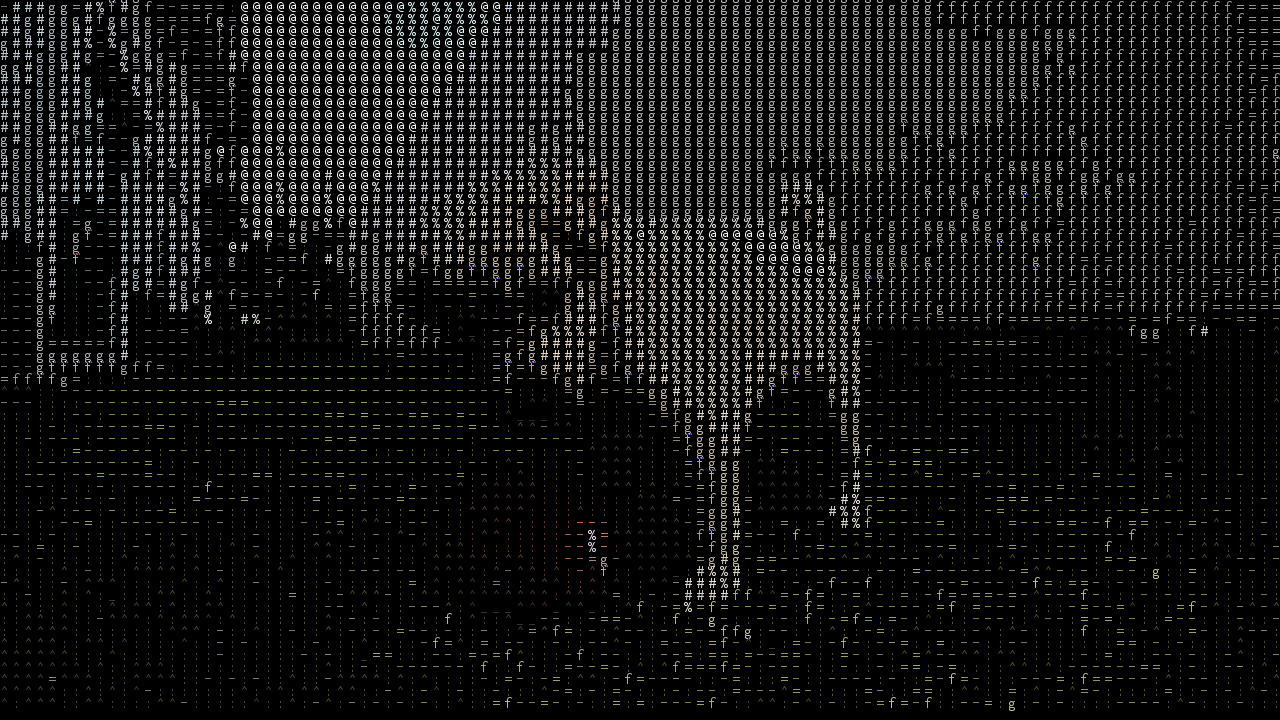
I had a similar experience when i was in highschool and learning python. I wrote a image->ascii image convertor using PIL as you did, one image would take a few hundred ms and it was fine, but as i played with it and added more features/learned more i tried to do it on video frames extracted with ffmpeg and it would take atleast 4x the duration of the video or even more to convert it in ascii video. Few months ago i coded it in go since i got back into programming and it was significantly faster(The overall code was also smaller but maybe that's just because i have a bit more experience now) even tho in both cases the implementations was the most naive one i could come up with, without any optimizations.

Edit: I went ahead and tested both, took me 30 mintues to set them with identic parameters on 3602 frames(roughly 1 minute video) Keep in mind that this is just a naive implementation with 2 nested loops itereting in a step of 12 over the pixels of the image, no fancy math or numpy used in the python version. Image for reference[0]. Also keep in mind that the step and length of the ascii charmap used affects performance but here i used a simple one "_^:-=fg#%@" so it's a bit easier for the python code, here are the results on my i7 9th gen laptop

1 Minute video 720p 60fps

GO - Execution time: 359647 ms, 5.9 minutes ("asciifying the frames") + 30~ seconds ffmpeg video conversion

Python 3.12.3 - Execution time: 0:16:25.002945, minus ~25-30 seconds ffmpeg

[0]: https://i.postimg.cc/CK30z1jt/frame-000039.png [1]: Video using a more detailed ascii charmap(" .,:;i1tfgLCG08@#") in the go version -> https://streamable.com/7h8jc3
Live from the official Hacker News API

A modern reader for Hacker News · SvelteKit + Skeleton