

bquinlan
Joined 13 years ago
Karma
269
Submissions
45
Member since
Jan 5
Joined 13 years ago
I don't disagree that she should work to improve, but you are using $90K as if it were a lot of money. According to census data [1], the median household income in San Ramon is $173,519/year and the median rent is $2,557/month.
In San Ramon, you can get paid $65,000/year as an assistant manager at Starbucks without getting a 4 year degree plus teaching credentials.
Plus, how is she earning so much? The San Ramon teacher salary schedule is public: [2]
[1] https://www.census.gov/quickfacts/fact/table/sanramoncitycal...
[2] https://www.srvusd.net/documents/Employment/Employment-Resou...
Their perception seems to be born out by the data:
From the Bay Area Rapid Transit Police Department [1]
Aggravated Assault (2019): 112
Aggravated Assault (2022): 114
Relative increase (2019 -> 2022) adjusted for ridership:
114/112/0.3 = 3.39x
[1] https://www.bart.gov/sites/default/files/docs/2023-01%20Mont...
Back in the day, I was on the team that added Python 2.7 support to App Engine and we were experimenting with a different containment approach.
But Python is a complex language to support - you need to support WSGI, to support dynamic loading (for C extensions), a reasonably performant file system (Python calls `stat` about a billion times before actually importing a file), etc.
So our original runtime was actually Brainf#ck. So, at once point, if you had guessed that Google supported it, you could have written your (simple) webapp in Brainf#ck and Google would have scaled it up to hundreds of machines if needed ;-)
I tried:
  inputs = {
      'matrix': [[10, 20, 30],
                 [5, 5, 10],
                 [2, 2, 1]]
  }
  output = [[85/10, 85/20, 85/30],
            [85/5, 85/5, 85/10],
            [85/2, 85/2, 85/1]]
  tf.cast(tf.divide(tf.reduce_sum(matrix), matrix),
          tf.float32)
I think that point can support working for either a big company or a small company depending on what type of impact you are looking for.
I've worked for startups in the past and have had a huge impact on the startup but almost no impact on the outside world because the startups just weren't tackling very visible problems.
Now I work for Google and I have basically zero impact on Google i.e. basically nothing that I can do will ever move the dial in terms of Google's revenue, etc. But I've worked on several projects that have had a big impact outside of Google. For example, I was on a small team (3 people) that developed the Python 2.7 runtime for App Engine (this was a while ago) and I was on another small team that implemented the server-side infrastructure for the Google Home. I also developed the screensaver for Chromecast - which is a tiny tiny project - but still millions of people love it.
I enjoyed the write-up but I have a small correction to make about "Frustrating moment #2. You can pass every interview with A grades and still not get a job, because a senior Googler decides that you're the wrong person to be hired."
The author is referring to hiring committees, whose job it is to take the feedback from every interview and make a hire/no-hire decision based on the blended results. I've done hundreds of interviews at Google and I've never seen universally positive interview feedback result in a no-hire decision.
The problem is that most feedback is not universally positive (or negative). So the hiring committee has to dissect the feedback and try to figure out if the identified negatives are (1) credible and (2) sufficient to be disqualifying. That can be pretty difficult (especially if the feedback is contradictory) and why a committee does it rather than the recruiter or hiring manager.
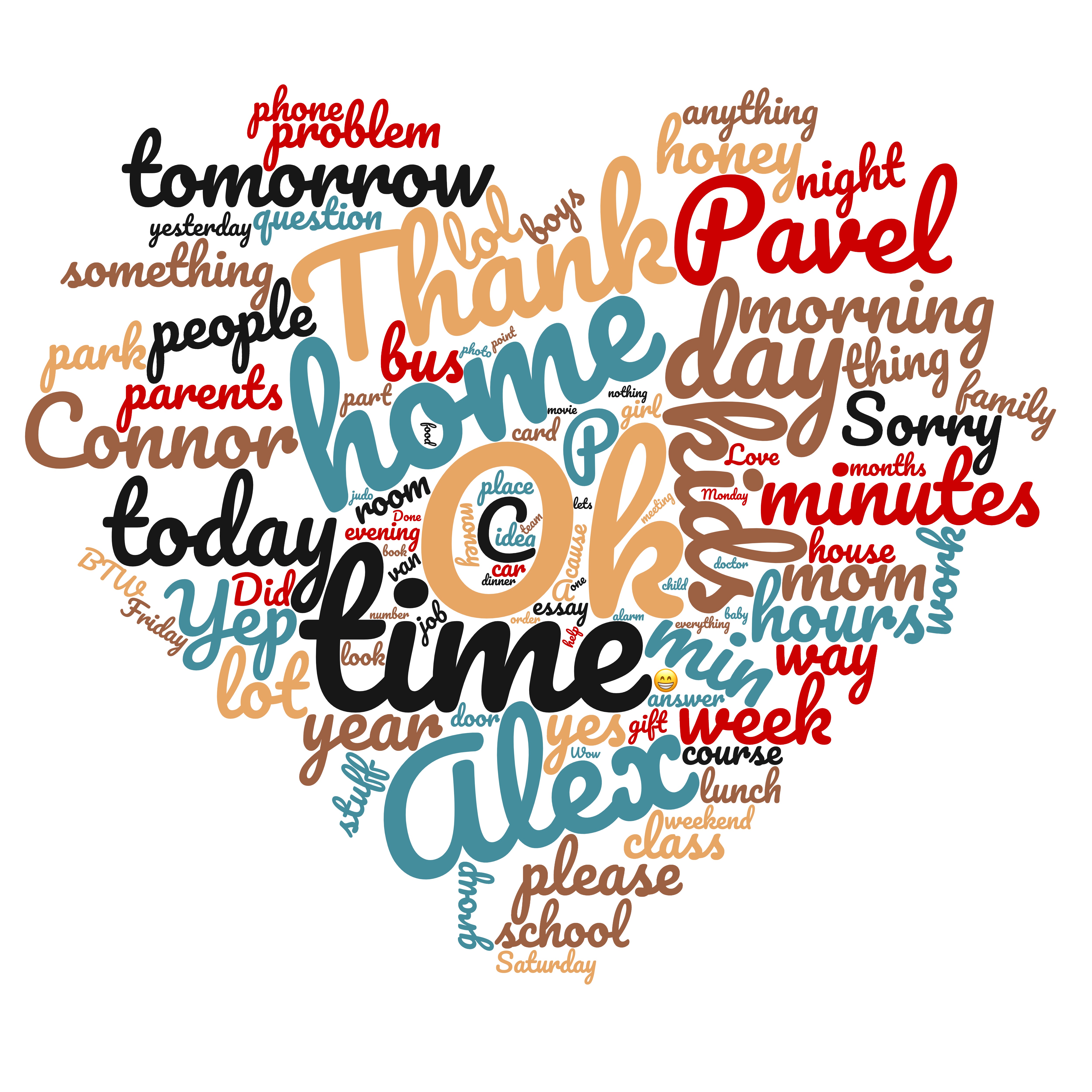
- https://raw.githubusercontent.com/brianquinlan/word-cloud-va...
- https://github.com/brianquinlan/word-cloud-valentine/blob/ma...
My implementation (https://github.com/brianquinlan/word-cloud-valentine) is a lot less sophisticated than stylecloud but I think that I had a few interesting ideas about text extraction.
I used nltk to extract only nouns and to do word stemming (e.g. so that "time", "times" and "timing" are only counted as one word).
I also experimented a lot with various method of determining word size i.e. size proportional to frequency, size proportional to log(frequency), size proportional to sqrt(frequency).
You can also opt to use precise text width measurements (important for Arabic, Chinese, etc.) but then you have to have the font file available on your system.
Python example:
  from pybadges import badge
  s = badge(left_text='coverage',
            right_text='23%',
           right_color='red')
  # s is a string that contains the badge data as an svg image.
  print(s[:40]) # => <svg height="20" width="191.0" xmlns="ht
  python -m pybadges \
    --left-text="coverage" \
    --right-text="23%" \
    --right-color="red"
I disagree with this. The interview that I enjoyed the most was with founders who took me out for beer. We talked a bit about software but most of the discussion was small talk.
After a few months of working there, I realized that some of the people in the office didn't really have any qualifications except "liking beer" and it wasn't a professionally interesting place to work.
My least pleasant interview experience was with Google but I enjoy working there.
The conferences were small (<200 people) but I don't remember the organization being as stressful as the article describes.
For me, the key sources of stress were:
1. hoping that tickets and sponsorship would cover our costs (at some point you have to pay for your venue, flights for your keynotes, etc. and this happens before ticket sales open). I think that we lost a few hundred dollars on the first conference and donated a few hundred dollars to the Python Software Foundation on the second one.
2. the BBQ. For both years, I arranged a beach BBQ but didn't have enough budget to deal with contingencies in the event of rain (remember this is Vancouver so the chance definitely exists). My plan was to refund attendees if we canceled the BBQ but that would have been thousands of dollars out of my pocket and lots of disappointed people. Fortunately, it didn't rain in either years.
I would say that convening a conference in a city where you have lots of connections really helps. For example, I was able to buy salmon direct from the docks for the BBQ because I knew someone who was willing to help me. I also used my family as the chefs (https://photos.app.goo.gl/C6yNzqMnBG98GxE36).
What I do remember being hard was not the planning but going without sleep during the conference itself. As a convener, I had to be at the venue before any attendees arrived, had to leave after the last attendee left and then still had to deal with issues, etc. for the next day.
Still it was tonnes of fun!

I'm not surprised about the angle-of-attack needing correction. The angle-of-attack is defined as the angle between the average chord (an imaginary line running from the leading edge of the wing to the trailing edge of the wing) and the relative wind. Since changing the flap position changes the position of the trailing edge, the angle-of-attack will also change.