Asdfbla
Joined 10 years ago
Karma
963
Submissions
192
Member since
Nov 9
Nothing interesting here.
View on Hacker NewsJoined 10 years ago
[1] https://sci-hub.tw/https://dl.acm.org/citation.cfm?id=295918...
That's one thing that bothers me about security in general, that it's so super political and it's a bit hard to just be interested in the technical aspects of it without being sucked into political bickering to some degree (can't follow Twitter accounts of most security people for that reason). Of course, I understand that it comes with the field since many adversaries simply have political motives. Still annoying though.
If I had spent more time thinking about what my passion is in life then I'd probably still sit there pondering without an idea of what to do.
Maybe Twitter should just let you filter posts based on content. (Maybe it's already possible, I'm not a big Twitter user.)
No idea if it's true or will work out that way, but it's one hypothesis I think is out there.
Sure, the downside of China's rise is that authoritarian states have more legitimacy, but it's not like the western powers did much about those states back when they were the hegemons, so I'm not sure if the argument carries much weight either.
There's probably a danger that large record labels will threaten to revoke their licensing agreements if they think that Spotify may start competing with them on that front. Not sure if that will be a problem, though, I'm not familiar with the whole streaming market.
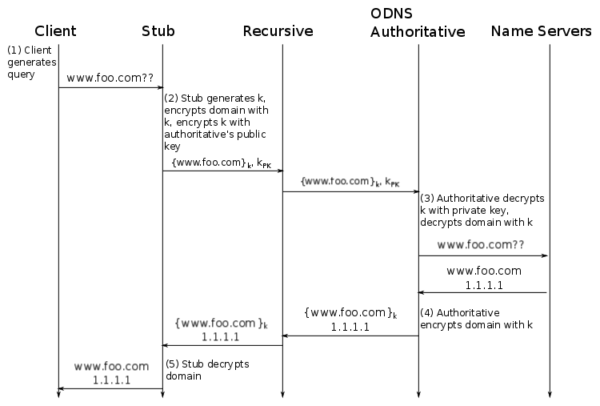
All seems to hinge on the recursive resolver acting as a proxy, so a direct response from ODNS server to the client stub doesn't seem safe.
[1] https://s3.amazonaws.com/ftt-uploads/wp-content/uploads/2018...
Filter bubbles, propaganda and competition for users' attention with clickbait and other cheap stories might even become worse, since a centralized platform could at least tweak their recommendations algorithms to break the bubbles (which Facebook doesn't seem to do, but it could).
Basically, I'm pessimistic because a distributed network only solves the (comparatively) easy technical challenge without addressing the problems of social networks.
Are encrypted DNS requests used by default? Does 1.1.1.1 somehow advertise to your client (whether it's a browser, the OS or a router) that encryption is possible? Do I have to configure my endpoint, which may expect to be able to send normal plaintext DNS requests, for it?
I guess DNS over HTTPS will surely not be supported by normal routers, but I don't know what other protocol Cloudflare refers to as "encrypted DNS", so maybe that will work.