

8fingerlouie
Joined 9 years ago
Karma
1,746
Submissions
799
Member since
May 1
Joined 9 years ago
Iran basically holds global oil supplies in a chokehold, and should the US choose to withdraw unconditionally today, Iran would still collect tariffs on all ships passing the strait, and be free to develop nuclear weapons.
Who's going to stop them ? Any attack would simply further constrain oil supplies, with increased costs as a direct consequence.
Regardless of the outcome, global oil prices have taken a permanent hike up. They'll likely drop quite a bit if/when the war ends, and Iran (or allies) stops bombing Saudi oil pipes, and likely also when the Ukraine/Russia war ends, where Russia can alleviate some of the pressure on asia.
If nothing else, its at least driving adoption of the electrification of the western society, and I'm seeing heat pumps and EVs selling at an increased pace. That obviously doesn't help if your electrical grid is also fossil fuel based, but there are also major renewable energy plants being commissioned.
Also, the war cannot be won without boots on the ground, and that is also not feasible as you need 2-4x the amount of soldiers that the enemy nation has to successfully conquer a nation (as per the US Army / CIA handbook), and Iran has about a million soldiers, so 2-4 million US soldiers would be required for that.
It would literally turn into another Vietnam or Afghanistan. Unfriendly terrain where everything needs to be flown or sailed in, hostile population where the US has been painted as the "big devil" for 50+ years.
Speaking of Afghanistan, Taliban had 58,000 "soldiers", and we sent almost 600,000 soldiers there (peak strength) and still lost the war, and Iran is very similar to Afghanistan.
On the other hand, a US retreat would mean Iran keeps the chokehold on global oil reserves, and are free to develop nukes, with any future missions by the US to limit their nuclear weapon research resulting in a worse situation than before.
So yeah, basically a forever war, one that everybody that knows even the tiniest bit about the Middle East has advised against pretty much forever.
If we're just talking verifying S3 connectivity, simply spinning up "rclone serve s3" appears to be the simplest solution.
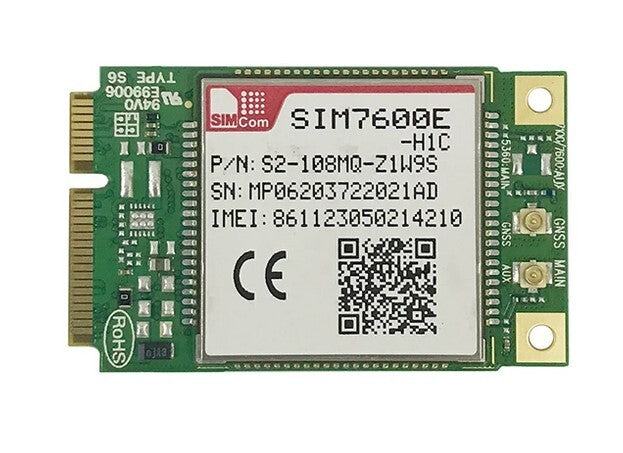
The linked image shows a module meant for easy integration, but it could also simply be a part of the main board of the TV. They could "hide" the GSM antenna alongside the wifi antenna.
And if they're not expecting to make $20 over 10 years selling your data, it hardly seems worth risking your reputation over.
It's much easier to just throw a $10 5G modem in there, pay the $2/year subscription fee for service, and extract data that way. Assuming a 5-10 year relevant lifespan of the TV, they'd throw $20-$30 on top of the sales price for the modem and 10 years of service.
The 5G modem could run completely independent of the wifi network, be a completely different circuit, and you'd never know it was there.
5G connectivity is cheap. You can put a 5G modem in pretty much any device for $10 or less, and pay roughly $2/year in subscription fees. My local water utility with ~900 subscribers pays $2/year for 5G connectivity for water meters, and I have no doubt you can get it much cheaper at scale.
They don't even have to tell you about the 5G modem. It could exclusively be used for exfiltrating data about your viewing habits. It's virtually undetectable and more or less impossible to block. The TV could behave nice on the Wifi, you can block all the DNS servers you like, it would still be able to phone home.
They gave every assurance that it would be secure, completely separate from the users own network, and the bandwidth consumed would be added on top of whatever the user had a contract for.
It took a couple of days after launch before somebody managed to gain access to someone's private network from the public network and they shut it down again and never opened it again.
Anyway, I may be spoiled from living in Denmark, but I'm using my own router, which is an option when ordering, so I'm fairly certain nobody is sharing additional wifi hotspots.
And it's not just me. The majority of people I know use some kind of 3rd party router with their ISP. Granted, some of them just use whatever the ISP sends them, but even then I haven't ever seen any additional wifi networks, and the ISP prints the router admin password on the box itself, so you can poke around if you like (though the ISP has a backdoor, which is also why 3rd party routers are a thing).
Assuming they install some 5G modem in the device, which is pretty much dirt cheap these days (our local water utility uses 5G for meter readings, and the cost per meter is something like $1/year), there's literally nothing short of a faraday cage you can do.
The can report on what you watch freely, and only consumer laws can stop them. However, without a wifi connection they can't snoop on your local network, and they probably can't connect the data to you, assuming you don't register the TV for those 3 months of added warranty or whatever they try to get you to register.
I tend to avoid devices that are built to snoop on you, so no Amazon Alexa, no Google Home, no Apple HomePod. Everything I have utilizes local control via Home Assistant, and most of it is actively blocked in the firewall from accessing the internet. It's not hard to implement, and doesn't require a master of IT, but it does remove a lot of the convenience, which I guess is the reason people don't do it.
I could see a threat if the TV had access to the internet and could establish a TLS tunnel or similar from the mothership, and execute commands on my LAN (or IoT network as it stands), and report back. That could establish a command & control channel that could potentially orchestrate an attack on my infrastructure via the TV.
However, reporting that "network X exists and has these devices" over a different network complicates things a fair bit. In theory they could still use the TV as a command and control platform, but it would have to switch networks between my closed network and the open network in order to execute commands and report results. Not saying it's impossible, just very unlikely.
Besides, the TVs are not alone in being cut off from the internet. I have two IoT networks, one for trusted devices (AppleTVs, Sonos, and the likes), and one for untrusted devices like TVs. They run on different VLANs, and anything on the untrusted IoT network can pretty much only talk to itself (client isolation) and the gateway, and there's no internet and no open ports to any other VLAN.
I could possibly do it via HDMI CEC, but I have a couple of Sony Bravia TVs that more often than not completely ignores that, so I prefer having control over assuming it happens.
It's a trade off I guess. I use Home Assistant to control TVs, so kinda need the access.
Otherwise I agree, and you don't even have to be that verbose with prompt engineering these days as LLMs have gotten increasingly good at figuring out what you want.
DNS lookups are redirected or blocked (53 redirected to my local DNS resolver, 853 blocked), and DoH is blocked as best effort though it's hard to block HTTP DNS traffic, which again is why the devices are blocked in the firewall.
All streaming is done via AppleTV, which is a platform I trust infinitely more than LG/Samsung/whatever.
The problem with archiving data is you always need to be prepared to use the "next big thing" once your preferred method becomes unobtainable.
I currently have :
- Photos in iCloud (Live working copy)
- Backup at home on NAS (updated nightly, snapshots)
- Backup in pCloud (lifetime, mine or theirs, no illusions, hopefully lasts a couple of months if I die unexpectedly)
- Yearly archive on external HDDs, identical copies stored in separate locations, clearly labeled "Photo backup". No encryption, no archiving, just plain APFS formatted drives that can be plugged into a computer and read.
- Yearly archive M-disc blu-ray discs, again, identical copies, stored in separate locations. One disc per year labeled as such, ie. "Photo Backup 2020". The idea being you restore them in chronological order and have a complete set.